
 Manufacturer
EEP Helix Test System
Product overview
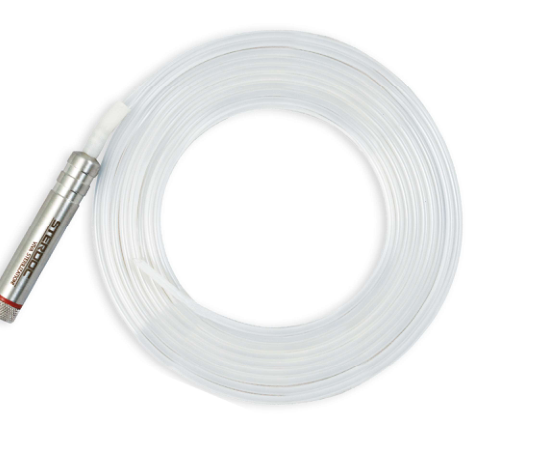
The catalogue describes a 4-metre PTFE tube and a metal capsule that holds the indicator. Place the consumable indicator strip as directed. Device compatibility, test cycle and replacement intervals for reusable components must follow the manufacturer’s instructions.
Product specifications
| Product code | KRBD-111 |
|---|---|
| Brand | EEP |
| Manufacturer | Krinmed |
| Indicator type | 2 |
| Storage temperature | 15–30°C |
| Tube length | 4 m |
| Tube material | PTFE |
| Capsule material | Stainless steel |
| Indicator strips per box | 250 |
Instructions for use
Select the cycle, placement and result interpretation according to this product’s instructions. A chemical indicator result alone does not establish sterility.
KRBD-111 is the helix system described with a PTFE tube and stainless-steel capsule. Treat the assembled device and its specified strip as a system. Replacement strips should be selected by compatibility documentation, not by whether they physically fit inside the capsule.
Where it fits in your workflow
A helix test system provides a defined challenge to sterilant penetration through a narrow path. Its response concerns the assembled test device under its intended conditions. The length of a tube alone is not enough to establish equivalence with another challenge device or with every hollow instrument in a load.
Practical use guide
Inspect the tube, capsule and seals before assembly. Use the specified consumable strip and follow its placement and closure instructions. Select the compatible test programme and placement. After the process, handle the device as directed and read the strip. Reusable components and single-use indicators require different replacement routines.
Reading and documenting the result
Compare the complete reactive area with the model reference and record the result with the load or test cycle. An unclear result requires investigation, including correct assembly and component condition. Do not mix strips from different manufacturers or change the tube geometry without an expressly validated combination.
Practical benefits
The system offers a repeatable challenge configuration when assembled and maintained correctly. Separating reusable hardware from its consumable indicator supports a structured stock and maintenance routine. Reusability does not imply unlimited life or a universal number of cycles.
Selection questions
Ask for the approved strip, device maintenance instructions, process compatibility and retirement criteria. Keep the reusable device identification in your records. A successful response applies to the specified test challenge; it is not a blanket claim that every lumen design has been sterilized.
Questions before ordering
What should I include in a technical enquiry?
Include the exact product name or code, equipment, process, packaging material and intended monitoring task. If you are replacing an existing product, provide its instructions and explain the application rather than requesting equivalence by appearance alone. Krinmed can then identify the relevant model documentation for your evaluation.
Can I use an image as the result reference?
No. Screen colour, lighting and image processing can alter the appearance of an indicator. Read an actual test against the current reference and instructions supplied for that product. Website photographs support identification and presentation; they are not a calibrated colour standard.