
 Manufacturer
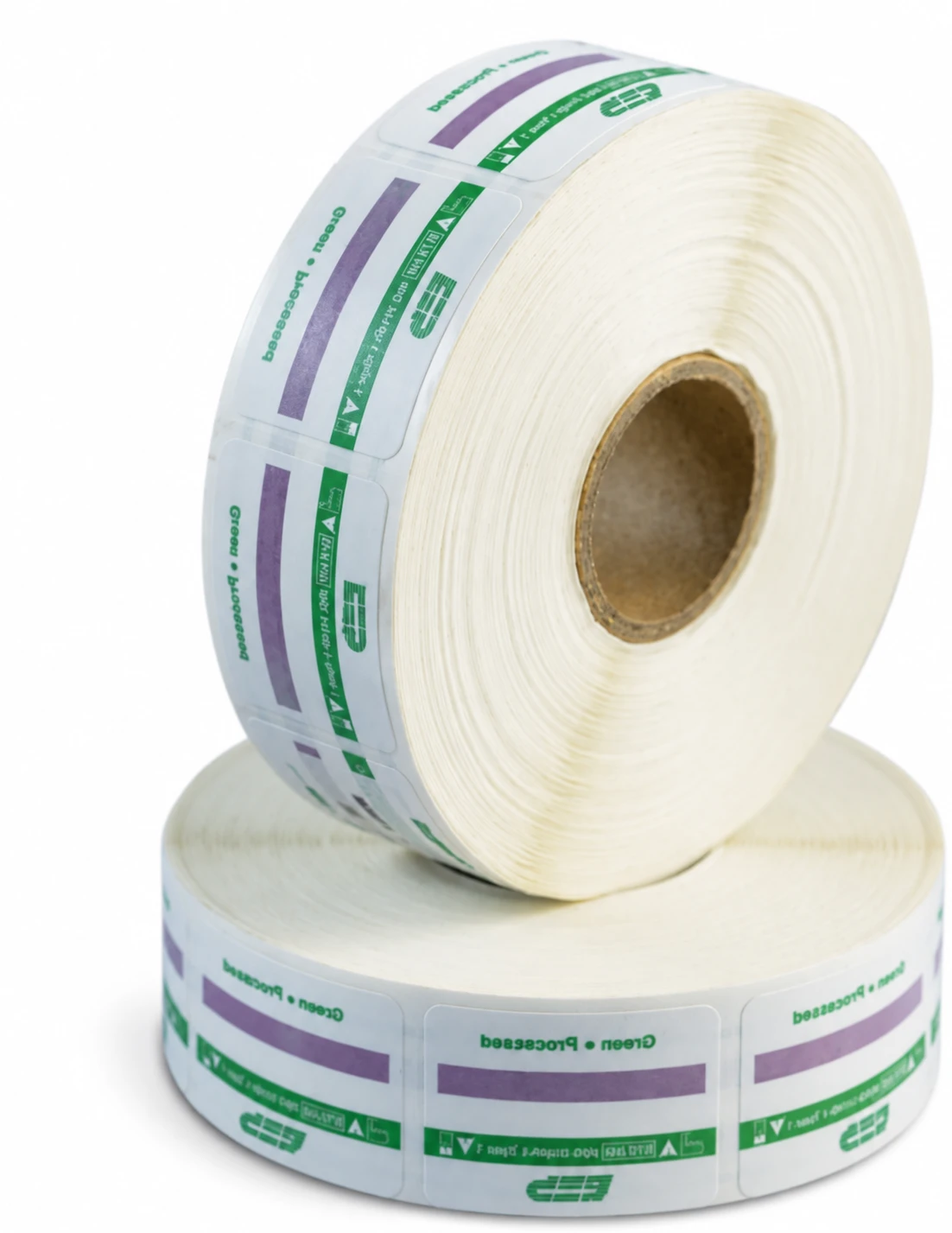
EEP Type 1 Steam Process Indicator Label
Product overview
Applied to the outside of steam-compatible packaging. A compatible three-line handheld labeler can print identification details to support package identification and traceability. A Type 1 response indicates process exposure; it does not confirm that every critical cycle variable has been achieved.
Product specifications
| Product code | KRLBI-102 |
|---|---|
| Brand | EEP |
| Manufacturer | Krinmed |
| Indicator type | 1 |
| Dimensions, mm | 20 × 30 |
| Units per pack | 750 |
| Storage temperature | 15–30°C |
Instructions for use
Select the cycle, placement and result interpretation according to this product’s instructions. A chemical indicator result alone does not establish sterility.
KRLBI-102 combines a steam process indicator with a three-line documentation label format. Use this model for the steam workflow and keep it distinct from the EO version KRLBI-101. The print layout should follow the identification fields your organisation has chosen; colour alone should not be the way staff select the roll.
Where it fits in your workflow
A documentation label connects an individual pack with its processing record. The printed identification and the process indicator have different roles: one identifies the pack, while the other records exposure. This distinction matters when packages move between preparation, storage and the point of use.
Practical use guide
Check that the roll fits the intended labeler and that the selected version matches the sterilization method. Test the print before labelling a batch. Apply the label to a suitable external area according to the packaging instructions, keeping it away from any area where it could obstruct a functional opening or compromise the seal.
Reading and documenting the result
Check both the printed data and the indicator response after processing. A readable batch identifier is necessary even when the indicator changes colour. Record the connection between the package and the load. A Type 1 response does not replace the internal indicator, physical cycle review or other controls required by your procedure.
Practical benefits
Using a consistent identification format helps staff find the relevant processing record when a question arises. A roll format supports repeated labelling tasks. These labels support traceability; they do not create a complete tracking system unless staff maintain the associated records.
Selection questions
Confirm label dimensions, roll orientation, core and labeler compatibility before bulk purchase. Decide which fields your local system needs, such as load identifier, date and operator. Do not assume every label can be peeled off and reapplied to a patient record; that requires a specifically confirmed adhesive construction.
Questions before ordering
What should I include in a technical enquiry?
Include the exact product name or code, equipment, process, packaging material and intended monitoring task. If you are replacing an existing product, provide its instructions and explain the application rather than requesting equivalence by appearance alone. Krinmed can then identify the relevant model documentation for your evaluation.
Can I use an image as the result reference?
No. Screen colour, lighting and image processing can alter the appearance of an indicator. Read an actual test against the current reference and instructions supplied for that product. Website photographs support identification and presentation; they are not a calibrated colour standard.