
Chemical Indicators Are Modality-Specific: Choosing and Interpreting Them Safely
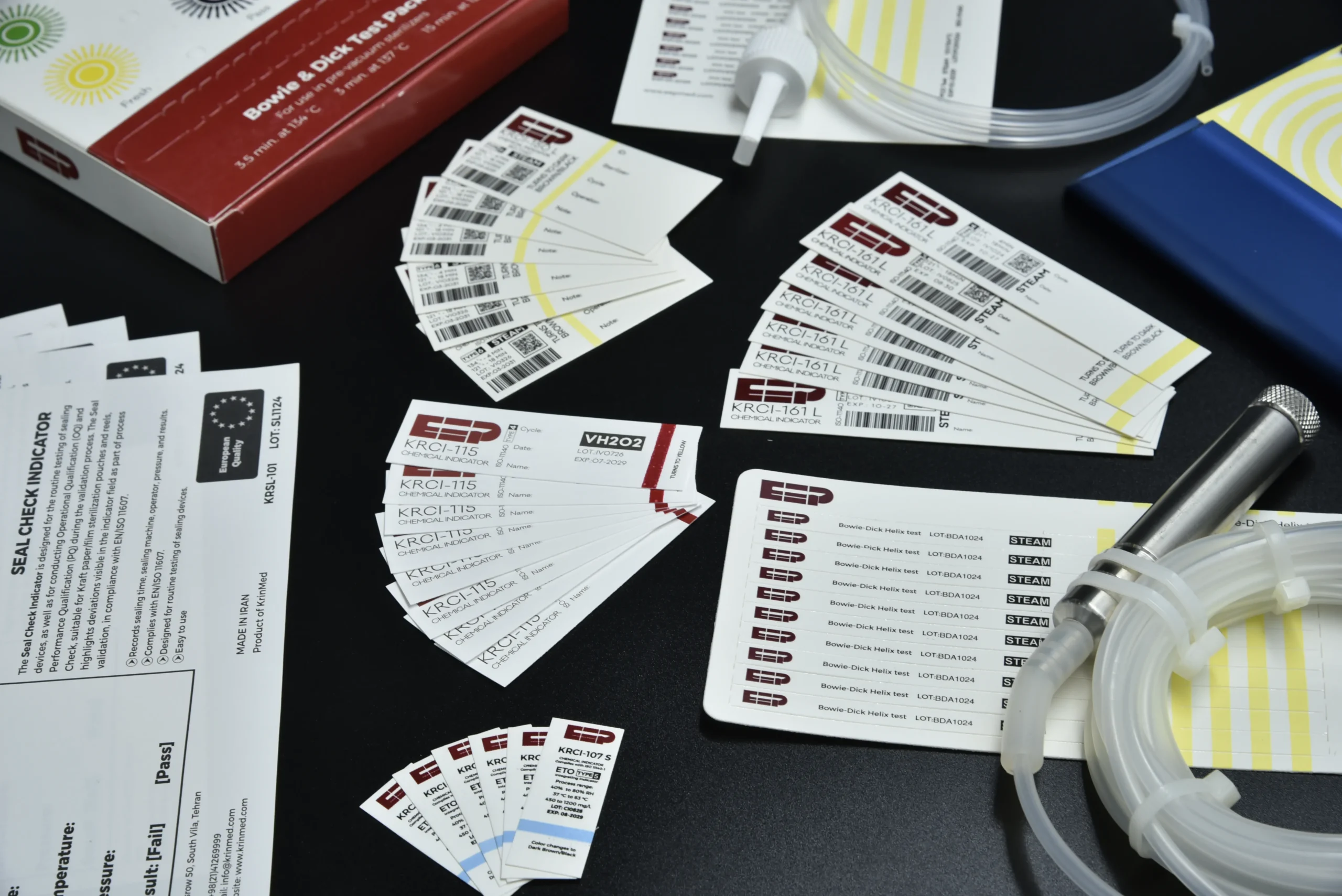
Chemical indicators are useful process-monitoring tools, but their meaning depends on the sterilization modality, intended use, and conditions for which the indicator was designed. A color change should not be interpreted in isolation or treated as proof that an item is sterile.
For sterile processing teams, the practical question is not simply, “Did the indicator change?” It is: Was the correct indicator used, did it respond as intended, and do the available process records support the decision?
Why indicator selection is a process decision
Chemical indicators are devices that respond to one or more physical or chemical conditions in a sterilization process. Depending on the product and its intended use, an endpoint may indicate exposure to a process, one parameter, multiple parameters, or a defined combination of critical process conditions. These functions are not interchangeable, and an indicator designed for one sterilization modality should not automatically be used for another.
FDA guidance identifies intended use, compatible sterilization cycles, critical parameters, minimum exposure conditions, endpoint stability, storage conditions, shelf life, and known interfering conditions as important aspects of chemical-indicator performance and labeling. [2]
Match the indicator to the sterilization modality
Steam sterilization
Steam indicators are designed around the conditions relevant to the specified process. Depending on the product, those conditions may include time, temperature, and saturated steam. The exact response requirements depend on the indicator’s labeling.
A steam indicator may show that it was exposed to conditions within its stated response range, but it does not independently demonstrate adequate air removal, correct load configuration, package integrity, or sterility. For wrapped or pouched items, an internal indicator can provide information about conditions at the location where it was placed. Placement should follow the indicator and packaging manufacturers’ instructions.
A satisfactory internal endpoint does not replace review of the sterilizer record, load configuration, package condition, or other monitoring information required by the facility’s documented process.
Ethylene oxide sterilization
Ethylene oxide indicators are intended for the EO process and the cycle conditions identified in their labeling. FDA guidance explains that chemical-indicator performance is evaluated under specified conditions and that an indicator may not directly measure every critical process variable. [2]
Accordingly, a satisfactory chemical endpoint should be interpreted as evidence of the indicator’s labeled response, not as independent confirmation that every requirement of an EO cycle was met. EO release and review decisions should follow the applicable sterilizer instructions, device and load requirements, facility policy, and validated process. The chemical result should be considered together with the relevant cycle records and other required controls rather than used as a substitute for them.
Hydrogen peroxide and other vapor or plasma processes
Low-temperature sterilization indicators are formulated for the sterilant and cycle conditions identified in their labeling. A steam indicator, EO indicator, or generic “sterilization strip” should not be substituted unless the manufacturer specifically identifies compatibility with the process and intended use.
Color changes can differ among modalities and manufacturers. Staff should use the manufacturer’s reference guide and endpoint instructions rather than relying on memory or comparing one product with another.
Use the label and IFU as the interpretation standard
Before introducing an indicator into routine use, verify:
- the sterilization modality and specific cycle range for which it is intended;
- whether it is intended for external process status, internal pack monitoring, a defined challenge device, or another purpose;
- the required placement and orientation;
- the endpoint description and any acceptable transition range;
- storage conditions, expiry, and protection from light, heat, moisture, or chemicals;
- the stability of the processed endpoint; and
- the actions required when the result is incomplete, atypical, or difficult to interpret.
FDA identifies intended use, critical parameters, minimum exposure conditions, interfering conditions, endpoint stability, recommended storage, and shelf life as important information for chemical-indicator submissions. [2] A local procedure should translate product-specific instructions into a consistent workflow without rewriting or simplifying the manufacturer’s acceptance criteria.
What a satisfactory endpoint can—and cannot—tell you
A satisfactory endpoint generally indicates that the indicator experienced conditions sufficient to produce its labeled response. It does not establish that:
- the device was clean before sterilization;
- the sterilant reached every relevant surface or lumen;
- the package remained intact;
- the load was assembled correctly;
- the entire chamber achieved uniform conditions; or
- the sterilization process achieved sterility assurance on its own.
The CDC describes chemical monitoring as one component of a broader sterilization-monitoring approach. It states that chemical indicators should not replace biological indicators because chemical indicators do not directly measure microbial killing. [1] Chemical indicators therefore provide important process information, but they are not standalone proof of sterility.
The use and frequency of biological indicators, and whether a biological-indicator result is required before release, depend on applicable guidance, the sterilizer and load type, facility policy, and the facility’s validated process. [1] This article does not establish release criteria for any particular facility or cycle.
An unsatisfactory or ambiguous endpoint should not be dismissed because the sterilizer record appears normal. The CDC advises that processed items should not be used when mechanical or chemical indicators suggest inadequate processing. [1] The response should follow the facility’s documented procedure and may include holding the affected load or items, verifying indicator and cycle compatibility, reviewing the load record and package condition, and determining whether biological monitoring or further investigation is appropriate.
A practical decision pathway
1. Confirm compatibility before use
Check the indicator label and IFU against the sterilizer modality, cycle, packaging system, and intended monitoring location. Do not rely only on the indicator’s color or general product name.
2. Confirm the indicator’s condition
Check expiry, lot identification when required, package integrity, and signs of moisture, heat, light, or chemical exposure. Quarantine questionable supplies rather than using them to make a release decision.
3. Interpret the endpoint against the approved reference
Use the manufacturer’s endpoint guide under adequate lighting. If the result is borderline, uneven, contaminated, damaged, or visually unclear, treat it as an interpretation problem requiring escalation—not as an automatic pass.
4. Correlate the result with the complete load record
Review cycle parameters, load identification, operator documentation, packaging condition, and internal or external indicators where applicable. Review biological-monitoring information when required by applicable guidance, the sterilizer or load type, facility policy, or the validated process. A chemical endpoint is one data element in a monitoring system.
5. Document the rationale
Records should identify the indicator type and lot when required, the load, the result, the person interpreting it, and any corrective action. Consistent documentation supports traceability and helps distinguish a product problem from a cycle, placement, packaging, or interpretation problem.
Limitations and implementation considerations
Chemical indicators are not interchangeable across sterilization modalities, and a general indicator category does not replace product-specific instructions. Color perception, lighting, faded endpoints, damaged indicators, and variation between manufacturers can affect interpretation. Staff competency should therefore include modality-specific training, visual examples of acceptable and unacceptable results, and a defined escalation route for uncertain endpoints.
Facilities should also avoid using an indicator result to compensate for missing process data. If a cycle record, load identification, biological-monitoring result, or packaging assessment is unavailable when required by policy or the validated process, the release decision should follow the facility’s documented hold and investigation procedure.
This article focuses on selecting and interpreting indicators across modalities. It should not be used to replace cycle-specific procedures, product IFUs, or facility procedures for resolving disagreement between indicator results and other monitoring information.
Key takeaway
The safest use of a chemical indicator begins with correct selection. Match the indicator to the sterilization modality and cycle, follow its IFU for placement and interpretation, and combine the result with mechanical monitoring, biological monitoring when applicable, package assessment, and review of the complete load record. The endpoint is evidence about the indicator’s exposure and labeled response—not a standalone certificate of sterility.
Educational disclaimer: This article provides general educational information for sterile processing and healthcare quality professionals. It does not replace applicable guidance, regulations, consensus standards, sterilizer instructions, medical-device IFUs, chemical-indicator IFUs, or the facility’s validated procedures.
References
- Sterilizing Practices. Centers for Disease Control and Prevention. 2023-11-22.
- Premarket Notification (510(k)) Submissions for Chemical Indicators: Guidance for Industry and FDA Staff. U.S. Food and Drug Administration. 2002-08-02.
- Standardization of color change interpretation for sterilization chemical indicators: A multicenter analysis aligned with international safety color standards. PubMed; American Journal of Infection Control. 2026-08-17.
Educational overview. Follow the applicable product instructions, validated procedures, local regulations and your facility’s approved policies.