
Can This Package Go Through This Sterilizer? A Compatibility Review for CSSD Teams
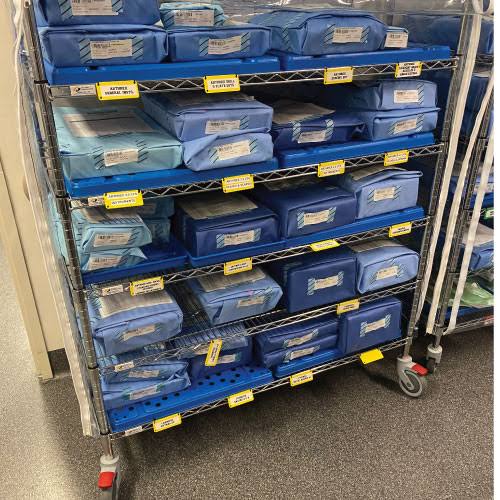
Packaging is not merely a container around a processed device. It must permit the applicable sterilant to reach the intended surfaces, protect the contents during handling and storage, and help maintain the sterile barrier until point of use. A package that appears acceptable after one cycle may still develop problems during drying, handling, transport, storage, or aseptic presentation.
For that reason, introducing a new pouch, wrap, rigid container, or device-and-package configuration should be managed as a defined change. This article focuses on compatibility evaluation for the complete configuration. It does not repeat the separate frameworks used to assess general load changes, investigate wet packs, determine event-related sterility practices, or resolve conflicting manufacturer instructions.
Why compatibility is more than “the cycle completed”
CDC guidance describes packaging functions that include permitting sterilant penetration, protecting against contact contamination, providing a microbial barrier, and maintaining sterility after processing.[2] These functions are related but not interchangeable.
- Sterilant access: Can the applicable sterilant reach the relevant surfaces and internal spaces?
- Process tolerance: Does exposure cause distortion, delamination, brittleness, corrosion, discoloration, residue, or loss of function?
- Barrier performance: Does the packaging remain intact after sterilization, cooling, handling, transport, and storage?
- Presentation: Can the package be opened or transferred without contaminating the contents?
A cycle record or chemical indicator can provide evidence related to exposure to specified process conditions. However, an indicator result should not be interpreted on its own as proof that sterilant reached every relevant location or that the package remained an effective sterile barrier. Those questions require review of the load configuration, package condition, and post-cycle handling.[2]
Start with a defined configuration
Assess compatibility for the complete configuration rather than for the packaging material in isolation. Record at least:
- the sterilization technology and specific cycle selected;
- the packaging format, material, dimensions, and closure method;
- the device or load contents, including sharp edges, hinges, lumens, and absorbent materials;
- the intended load density and orientation;
- the number of packaging layers and any protective accessories; and
- the expected storage, transport, and handling conditions.
The same package may behave differently with a light instrument set, a dense tray, a device with a lumen, or a configuration requiring additional protection. CDC guidance emphasizes arranging items so that packaging and device configuration do not impede sterilant penetration.[2]
Review instructions before testing
Review the packaging manufacturer’s instructions for the supported sterilization methods, applicable cycle families, sealing or closure conditions, weight or size limitations, and any restrictions on reuse. Review the device manufacturer’s reprocessing instructions as well.
If the instructions do not clearly support the proposed combination, place the configuration on hold and use the responsible quality or technical process to resolve the issue. This article does not replace the procedure for conflicting instructions; it addresses the additional question of whether a defined, instruction-supported configuration remains compatible through processing and handling.
Do not infer compatibility from a similar-looking product, a similar sterilizer, or a previous package format. Material construction, adhesive systems, coatings, indicator inks, filters, and seal designs can differ in ways that are not apparent during routine inspection.
Use a staged evaluation before routine release
1. Document the change
Define what is changing, why it is changing, which products and cycles are affected, and who is responsible for approval. Include sterile processing, infection prevention, purchasing, biomedical or engineering support when appropriate, and the relevant device or packaging manufacturer.
2. Confirm basic process compatibility
Verify that the package is intended for the selected sterilization technology and that its dimensions, closure method, and contents fall within the applicable instructions.
For sterile medical devices, FDA’s recognized-standards information lists ISO 11607-1 and ISO 11607-2 and identifies ISO/TS 16775:2021 guidance in relation to sterile barrier and packaging systems.[3] ISO/TS 16775 is informative guidance; its listing does not, by itself, establish a mandatory facility requirement or replace applicable manufacturer instructions, site procedures, or evidence for the proposed configuration.
3. Evaluate the real configuration
Use representative loads and configurations that reflect intended practice. As a facility change-control approach, the evaluation may include the largest, heaviest, densest, or otherwise most challenging configuration the department plans to process, provided that this is consistent with applicable manufacturer instructions and available validation documentation. Do not assume that one challenging configuration represents every permitted configuration.
Observe whether the package loads correctly, permits appropriate sterilant contact, dries adequately when relevant, and exits the cycle without visible deformation or damage. Monitoring required by applicable instructions and policy should be reviewed as part of the evaluation. CDC describes mechanical, chemical, and biological monitoring within a sterilization assurance program.[1] Monitoring results should be interpreted alongside packaging observations; acceptable process-monitoring results do not remove the need to inspect the package.
4. Inspect after processing and handling
Inspect the package after it has cooled and again after simulated or routine handling. Look for:
- open, channelled, incomplete, or distorted seals;
- punctures, tears, abrasions, cracks, or delamination;
- wetness, trapped moisture, or evidence of inadequate drying;
- collapsed or displaced filters, lids, or protective components;
- loss of legibility of labels or indicators;
- damage caused by sharp instruments or excessive weight; and
- difficulty opening the package without contaminating the contents.
Packaging that is wet, torn, punctured, or otherwise compromised should not be released for use. Storage and handling should protect packages from moisture, dust, excessive handling, and other conditions that could compromise package integrity.[2] The specific investigation and disposition of wet packs belongs to the site’s wet-pack procedure and is outside this compatibility review.
Separate process evidence from package evidence
A useful change-control record distinguishes three questions:
- Was the sterilization process acceptable? Review the cycle record and monitoring required by applicable instructions and policy.
- Was the intended configuration exposed to the process? Review applicable internal monitoring and the load configuration. An indicator result is evidence of exposure to specified conditions, not a standalone assessment of every location in the load or of package integrity.[2]
- Did the package remain a protective sterile barrier? Review seal or closure condition, material integrity, dryness where relevant, and post-cycle handling.[2]
This separation prevents a satisfactory indicator result from being treated as proof that the package is suitable for storage or point-of-use presentation. Decisions about event-related sterility and storage duration should follow the facility’s applicable policy rather than being inferred from this compatibility review.
When additional technical evaluation is needed
Additional evaluation is especially important when introducing a new material, changing sterilization technology, increasing package size or weight, changing the sealing process, processing a new device geometry, or changing storage and transport conditions.
For sterile devices submitted by manufacturers, FDA guidance discusses packaging validation in the context of maintaining sterile barrier integrity through manufacturing, sterilization, distribution, storage, and shelf life.[4] This is primarily relevant to device manufacturers and sterile-device submissions. It should not be interpreted as a universal requirement that every CSSD reproduce all manufacturer packaging-validation tests.
A healthcare facility may not perform every packaging test used by a medical-device manufacturer. The practical requirement is to define the limits of the facility’s evaluation, obtain appropriate manufacturer documentation, and avoid making claims that the available evidence cannot support.
Practical decision rule
Before routine use, approve the configuration only when:
- the package and device instructions support the intended sterilization method;
- the proposed load configuration is defined and reproducible;
- monitoring required by applicable instructions and policy is acceptable;
- the package remains intact, dry when applicable, and functional after processing;
- handling and aseptic presentation are practical; and
- the evaluation, deviations, approvals, and follow-up actions are documented.
If any element is unresolved, hold the change and escalate it rather than relying on visual similarity or a single successful cycle.
Limitations
This article provides an educational framework for healthcare sterile processing and quality teams. It does not replace the sterilizer, device, packaging, or indicator manufacturer’s instructions; site-specific evaluation; applicable regulations; or current relevant consensus standards. ISO/TS 16775 is informative guidance and does not itself establish mandatory facility requirements. Packaging decisions for commercially manufactured sterile medical devices may require formal validation beyond routine CSSD testing.
Educational disclaimer: This content is for professional education and does not constitute patient-specific medical advice, regulatory advice, or certification of any packaging system.
References
- Recommendations for Disinfection and Sterilization in Healthcare Facilities. Centers for Disease Control and Prevention. 2024-06 update.
- Sterilizing Practices. Centers for Disease Control and Prevention. 2023-11-28.
- Recognized Consensus Standards: Medical Devices — ISO 11607-1 and ISO 11607-2. U.S. Food and Drug Administration. 2023-05-29.
- Submission and Review of Sterility Information in Premarket Notification (510(k)) Submissions for Devices Labeled as Sterile. U.S. Food and Drug Administration. Current FDA guidance document.
Educational overview. Follow the applicable product instructions, validated procedures, local regulations and your facility’s approved policies.