
Immediate-Use Steam Sterilization: A Controlled Exception, Not a Shortcut
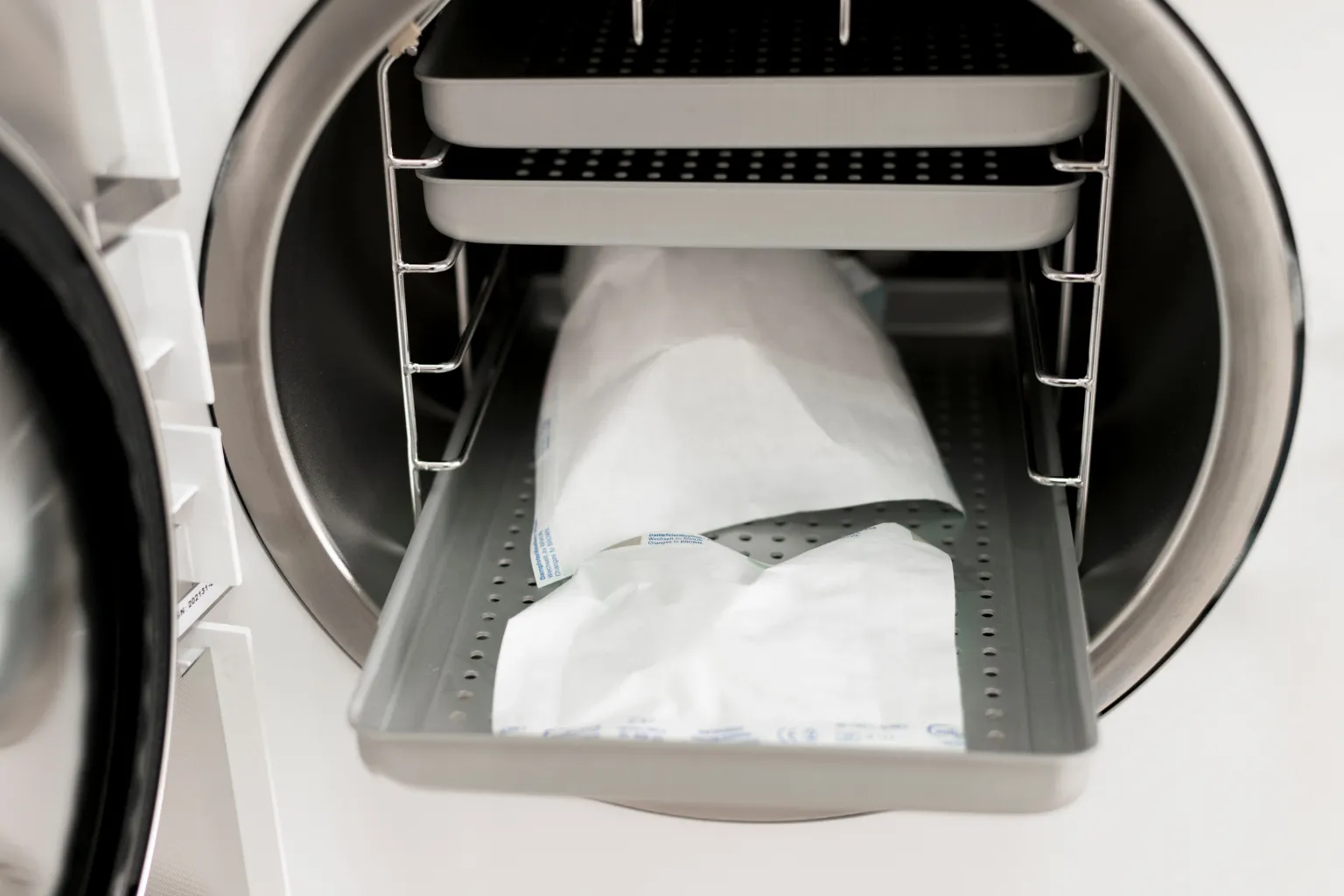
Immediate-use steam sterilization (IUSS), historically called “flash sterilization,” is intended for a cleaned critical item that must be used promptly and cannot be processed, packaged, and stored by the preferred wrapped method. It is a controlled exception—not a substitute for adequate instrument inventory, case planning, or routine convenience processing. [1]
This article focuses on the IUSS-specific control points that connect processing with immediate delivery to the point of use: appropriate indication, cleaning and preparation, cycle selection, monitoring, aseptic transfer, implant-related risk, and traceability. It does not replace facility procedures covering general steam sterilization, post-sterilization handling, or broader instrument-management programs.
When IUSS may be appropriate
CDC guidance describes IUSS as an option for a patient-care item that cannot be packaged, sterilized, and stored before use, such as an instrument inadvertently dropped during a procedure. The item should be used immediately after processing. [1]
IUSS should not be selected merely because a department lacks enough instrument sets or because a wrapped cycle would be inconvenient. Repeated use may indicate an underlying issue involving instrument availability, case-cart planning, turnaround, or scheduling. The organization should investigate those causes rather than normalize IUSS as a routine workflow.
Control point 1: Clean and prepare the item
The item must be thoroughly cleaned before sterilization. Residual soil, tissue, or other organic material can interfere with contact between steam and the device surface. Instruments should be disassembled as required by the device manufacturer’s instructions, inspected for cleanliness and function, and positioned so that steam can contact relevant surfaces.
The selected cycle must be appropriate for the sterilizer, load, and device configuration. Factors include whether the item is porous, nonporous, or contains lumens. Published example parameters are not universal operating instructions; the sterilizer and device manufacturers’ instructions control the actual process. [1]
Control point 2: Monitor the sterilization process
IUSS requires mechanical, chemical, and biological monitoring appropriate to the sterilizer and cycle. CDC specifically recommends monitoring sterilizer function with all three types of monitors when flash sterilization is used. [2]
Use a biological indicator intended for the specific sterilizer and cycle parameters, following the indicator manufacturer’s instructions. [3] When a biological indicator is used, staff should follow the manufacturer’s instructions for placement, incubation, controls, and interpretation. A negative chemical-indicator result does not replace biological monitoring where biological monitoring is required by facility policy, the device or sterilizer instructions, or applicable standards.
A short cycle does not reduce the need to evaluate process performance. Monitoring results should be reviewed and managed according to the organization’s approved procedures, including procedures for an abnormal or positive result.
Control point 3: Transfer the item aseptically
Sterilization is not the end of the process. After an unwrapped cycle, the item is exposed to the environment and may be hot or wet. Staff should use a transfer method that protects the item from contamination and prevents burns. The route from the sterilizer to the sterile field should be as short and controlled as practicable. [1]
If a covered rigid container or another protective system is used, it must be specifically designed and approved for use with the relevant sterilizer and cycle. Packaging or containers should not be improvised for IUSS. [2]
Because IUSS is intended for immediate use, the organization should define how staff will protect the processed item during removal, transport, and delivery. Any event that compromises the item or the transfer process should be managed according to facility policy rather than treated as a successful sterilization solely because the cycle completed.
Implants require a separate risk decision
Implantable devices present a higher consequence if a sterilization failure occurs. CDC does not recommend flash sterilization of implants unless it is unavoidable. If an implant must be processed in this way, documentation should support epidemiological tracking, including load identification, patient or procedure linkage, and the biological-indicator result. [1]
Where possible, an implant should remain quarantined until the biological-indicator result is known to be negative. The organization should define escalation and authorization procedures in advance for situations in which clinical urgency conflicts with waiting for that result.
IUSS-specific documentation and traceability
The IUSS record should allow the organization to reconstruct the exception, the processing event, and the item’s delivery to the point of use. At a minimum, local policy and system capability should address the following IUSS-specific elements:
- the reason IUSS was necessary;
- date and time of processing;
- sterilizer identification, cycle type, and load or cycle number;
- device or instrument identification;
- operator identification;
- mechanical parameters or the cycle printout;
- chemical-indicator result;
- biological-indicator identification and result, when used;
- the transfer method or protective system used; and
- patient or procedure linkage when an implant or other high-consequence item is involved.
A review of IUSS identified cleaning and decontamination, sterilization, aseptic transfer, and complete documentation as necessary elements of an immediate-use process. [4] Documentation is therefore part of the safety control, not merely an administrative record. It supports investigation if an indicator, device, or patient outcome later raises concern and helps the organization identify repeated reliance on IUSS.
Practical CSSD audit questions
- Can staff explain the approved indications for IUSS?
- Is the reason for each IUSS cycle recorded and periodically reviewed?
- Does the selected biological indicator match the immediate-use process?
- Are devices cleaned and prepared according to their instructions for use?
- Are containers and transfer methods approved for the sterilizer and cycle?
- Can the IUSS load be linked to the procedure and, when necessary, the patient?
- Are implant-related IUSS events subject to defined authorization, tracking, and follow-up?
- Are repeated IUSS events analyzed for inventory, scheduling, or workflow causes?
How IUSS fits with related reprocessing controls
IUSS should be evaluated as a complete process rather than as an isolated cycle-time decision. General education on steam-cycle selection, post-sterilization handling, implant loads, and traceability may be useful alongside this article, but those topics should not be treated as interchangeable with IUSS controls. A shorter processing time does not eliminate the requirements for cleaning, monitoring, controlled transfer, or documentation described here.
Limitations
CDC’s underlying guideline was issued in 2008, although the referenced CDC webpages were updated in 2023. CDC guidance should therefore be considered alongside current manufacturer instructions, facility policy, applicable regulations, recognized standards, and current professional requirements. Public guidance does not establish one universal IUSS workflow for every sterilizer, device, facility, or jurisdiction.
Cycle parameters, monitoring products, container systems, and documentation requirements must be verified against the applicable instructions and requirements. The review cited above supports cleaning and decontamination, sterilization, aseptic transfer, and documentation; it should not be read as independently establishing every operational detail described in this article.
Educational disclaimer: This article is for educational purposes for healthcare reprocessing and quality professionals. It does not replace the device, sterilizer, monitoring-product, or container manufacturer’s instructions, applicable regulations, or facility-approved policy.
References
- Flash Sterilization. Centers for Disease Control and Prevention. 2008; page updated 2023.
- Recommendations for Disinfection and Sterilization in Healthcare Facilities: Flash Sterilization. Centers for Disease Control and Prevention. 2008; page updated 2023.
- Sterilizing Practices. Centers for Disease Control and Prevention. 2008; page updated 2023.
- Immediate use steam sterilization: it's all about the process. AORN Journal; PubMed. 2013.
Educational overview. Follow the applicable product instructions, validated procedures, local regulations and your facility’s approved policies.