
Process Challenge Devices: Match the Challenge to the Load
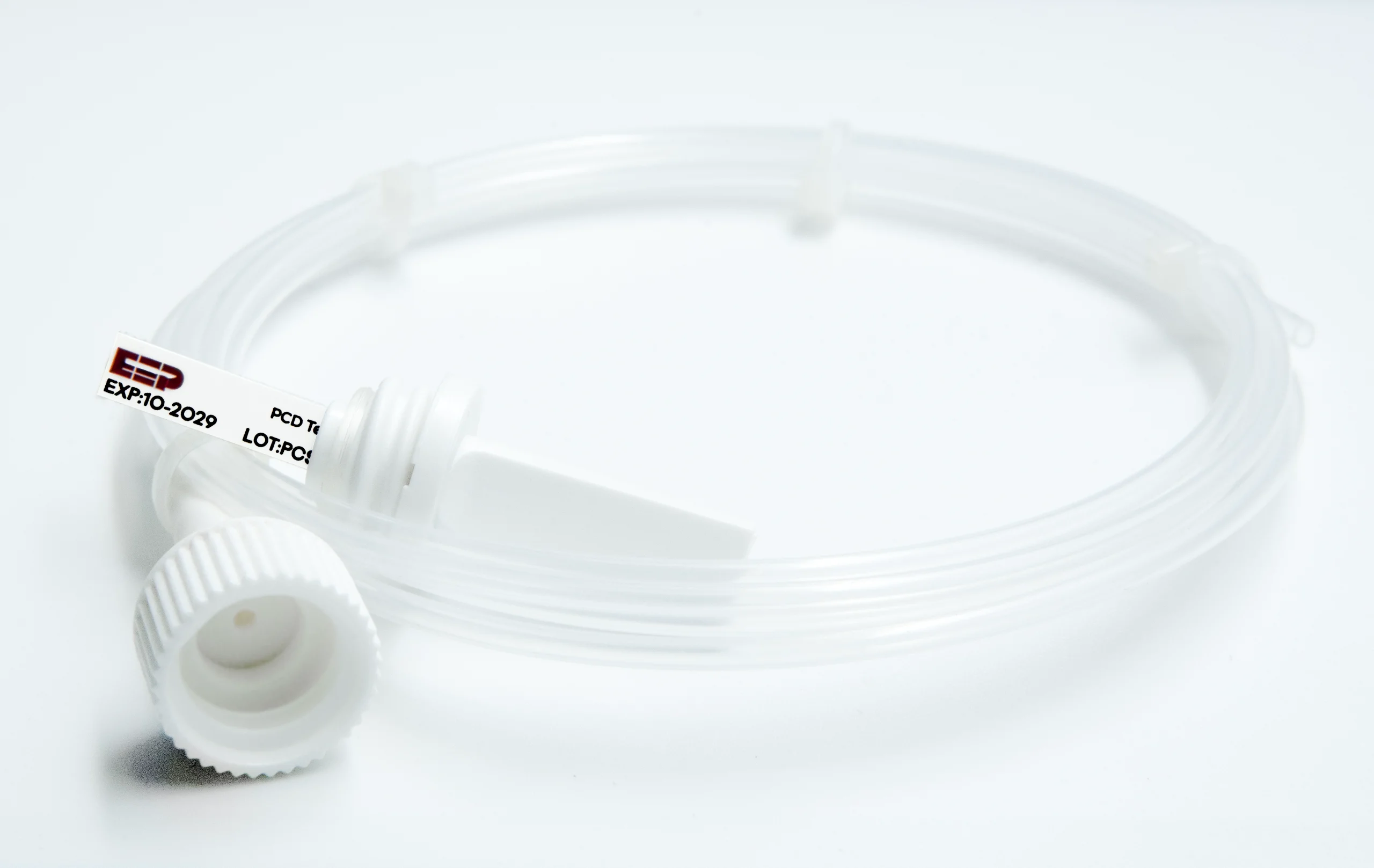
Process challenge devices (PCDs) are used to present a defined challenge to a sterilization process. The challenge may involve air removal, sterilant penetration, or microbial inactivation, depending on the test design and indicator used. CDC guidance describes related applications involving biological and chemical monitoring, challenge test packs, Bowie-Dick testing, and placement of test packs in locations that represent a significant challenge to sterilization. [1][3]
These applications should not be treated as interchangeable. The meaning of a PCD result depends on the device design, indicator, sterilization modality, cycle, load, placement, and instructions for use. The practical question is not simply, “Did the PCD pass?” It is, “What conditions did the PCD challenge, and how are those conditions relevant to this load?”
What a PCD result can—and cannot—show
A PCD can provide a standardized challenge under defined processing conditions. Depending on its design, it may contain a biological indicator, a chemical indicator, or another monitoring system. CDC describes mechanical, chemical, and biological monitoring as serving different purposes within a sterilization-monitoring program. [1]
A passing result demonstrates the response of the indicator or monitoring system under the challenged conditions. It does not independently establish that every item in the load is sterile. It also does not replace review of the sterilizer cycle record, package condition, internal indicators where applicable, device assembly, cleaning, or the relevant manufacturer instructions.
Sterilization difficulty can vary with device and load characteristics. CDC identifies factors affecting sterilization efficacy that include inadequate cleaning, excessive load size, improper arrangement, and device or packaging characteristics that interfere with sterilant contact. [2] Complex assemblies, narrow internal pathways, and dense or poorly arranged loads may therefore require particular attention when a facility selects and places its monitoring tools.
Start with the load and process
PCD selection should begin with a description of the load and the sterilization process. Before selecting or assigning a challenge device, document characteristics that may affect the interpretation of the result:
- Sterilization modality: steam, ethylene oxide, vaporized hydrogen peroxide, or another validated process.
- Device characteristics: solid instruments, porous materials, tubing, internal channels, hinged instruments, or complex assemblies.
- Packaging: pouches, wrapped trays, rigid containers, or another sterile barrier system.
- Load configuration: density, orientation, stacking, and the presence of unusually difficult items.
- Monitoring purpose: sterilizer testing, routine monitoring, quality assurance, or another defined application.
The available CDC sources support the use of different monitoring approaches for different questions; they do not establish one universal PCD-selection rule for all steam, ethylene oxide, and vaporized hydrogen peroxide loads. Facilities should therefore use the sterilizer, PCD, indicator, and device manufacturers’ instructions, together with applicable validated procedures, when determining whether a PCD is suitable for a particular process.
A challenge that is less difficult than the load may provide limited reassurance. Conversely, a challenge that does not represent the relevant process or device characteristics may be difficult to interpret. The objective is not to select the most difficult-looking device, but to use a defined challenge that is appropriate to the intended application.
Different monitoring applications answer different questions
Air-removal and challenge test packs
For dynamic-air-removal steam sterilizers, Bowie-Dick testing evaluates air removal and steam penetration under the conditions of the test. CDC describes the Bowie-Dick test as a diagnostic test of air removal rather than a direct test of sterilization. [3]
A satisfactory Bowie-Dick result therefore addresses the air-removal performance represented by that test. It should not be presented as proof that every packaged device in a later load received adequate sterilant contact. The test should be used for its defined purpose and according to the applicable instructions.
Hollow or internal-pathway challenges
Devices with tubing, channels, or other internal spaces can present a challenge to air removal and sterilant penetration. The review literature describes testing approaches for assessing penetration through hollow pathways. [4]
The result should not be generalized to every lumen or device configuration. Whether a particular hollow challenge is appropriate depends on the validated application, the sterilizer cycle, the PCD design, and the device and PCD manufacturers’ instructions. If those instructions specify a connection, adapter, assembly, cycle, or monitoring approach, the facility should follow them rather than assume that a generic hollow-device PCD represents all internal pathways.
Biological-indicator PCDs
Biological indicators use standardized resistant microorganisms to provide a biological challenge to the process. CDC identifies biological indicators as the process monitors that most directly assess microbial inactivation, while also distinguishing their role from mechanical and chemical monitoring. [1]
A biological-indicator PCD provides direct evidence of the indicator’s response under the challenged conditions. It does not, by itself, demonstrate that cleaning was adequate, packaging remained intact, the cycle was appropriate for the product, or every item in the load experienced identical exposure.
Placement is part of the test
Even an appropriate PCD can produce an uninformative result if it is assembled, oriented, or placed incorrectly. The location should be selected according to the PCD instructions and the facility’s validated procedure. Where the procedure identifies a location expected to represent a significant challenge, that location should be used consistently.
CDC notes that test packs should be positioned in an area representing a significant challenge to sterilization, including a location near the drain in certain steam-sterilizer testing applications. [1] This placement guidance should not be generalized automatically to every PCD, load, or sterilization modality.
A documented procedure should identify:
- which loads or testing applications require the PCD;
- which PCD and indicator are used;
- where and how the PCD is placed;
- which sterilization cycle is permitted;
- who reviews and records the result; and
- how invalid, missing, or unacceptable results are handled.
Interpret the result within the release process
A PCD result is one element of a controlled review. A practical sequence, subject to facility policy and applicable instructions, is to:
- Confirm the sterilizer, cycle, PCD, indicator, and relevant lot information.
- Review the cycle record for the required physical parameters and alarms.
- Verify that the PCD was assembled, positioned, and processed as specified.
- Interpret the indicator according to the manufacturer’s instructions and required readout or incubation conditions.
- Inspect packages for moisture, damage, seal defects, or other integrity concerns.
- Review internal and external chemical indicators where required by the applicable procedure.
- Document the decision, including deviations, investigation, or corrective action.
When a PCD result is unacceptable or cannot be interpreted, the facility should follow its documented nonconformity and release procedure. That may include placing the associated load on hold, reviewing the cycle and load record, checking PCD placement and handling, and evaluating packaging, device compatibility, operator actions, sterilizer alarms, and possible indicator or readout problems. The sources provided here do not establish a single universal failed-PCD disposition for every facility or sterilization modality.
Common weaknesses in PCD programs
- Using one PCD for every application: the challenge may not address the characteristics of hollow, porous, or complex loads.
- Changing placement without documentation: results become difficult to compare over time.
- Confusing a Bowie-Dick result with proof of load sterility: air-removal testing answers a narrower question. [3]
- Ignoring manufacturer instructions: a generic challenge may not represent the validated application for a particular device, cycle, or configuration.
- Failing to link results to the load record: the facility loses traceability for what was tested and reviewed.
- Reviewing the PCD without reviewing the load: a passing result does not correct inadequate cleaning, incorrect assembly, overloading, or damaged packaging.
Practical implementation checklist
CSSD leaders can create a load-to-challenge matrix that identifies each load category, sterilization modality and cycle, relevant device features, PCD and indicator, placement, review steps, and escalation pathway. The matrix should be reviewed when the facility introduces a new sterilizer, cycle, packaging system, device family, or load configuration.
Competency assessment should include more than recognizing an indicator change. Staff should be able to explain what the PCD challenges, why it is used in a particular location, what a passing result indicates, and what it does not indicate.
Limitations
PCDs are defined challenge tools, not direct measurements of every item in a load. Their interpretation depends on the challenge design, indicator characteristics, placement, cycle compatibility, and correct use. The supplied sources address particular monitoring applications and sterilization factors; they do not provide a universal selection or release rule for every sterilization modality, device type, or facility. Facilities should follow applicable regulations, standards, sterilizer instructions, PCD instructions, device instructions, validated procedures, and local policy.
Educational disclaimer: This article is for professional education and does not replace applicable standards, regulations, manufacturer instructions for use, validation activities, or facility policy.
References
- Sterilizing Practices: Guideline for Disinfection and Sterilization in Healthcare Facilities. Centers for Disease Control and Prevention. Updated June 2024.
- Table 10: Factors Affecting the Efficacy of Sterilization. Centers for Disease Control and Prevention. Updated June 2024.
- Glossary: Guideline for Disinfection and Sterilization in Healthcare Facilities. Centers for Disease Control and Prevention. Updated June 2024.
- Steam sterilization: Review of autoclaves, validation, instrument packing, and sterility failures. National Center for Biotechnology Information, PubMed Central. 2025.
Educational overview. Follow the applicable product instructions, validated procedures, local regulations and your facility’s approved policies.