
Biological Indicator Controls: How to Interpret Results Without Overclaiming
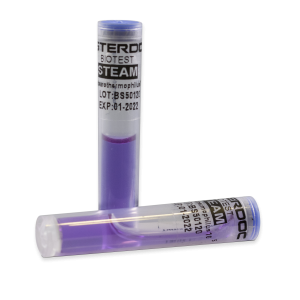
Biological indicators (BIs) are used to monitor sterilization processes by challenging the process with resistant bacterial spores. A BI result is not self-interpreting, however. The test indicator, an appropriate positive control, the incubation process, and the associated sterilization records should be reviewed as one evidence set.
What a biological indicator can—and cannot—show
A BI is intended to show whether the test spores survived the sterilization process. When the test BI is negative and the control behaves as expected, the result supports effective exposure of that indicator to the process. It does not establish that every item in the load was sterile, that every location received identical conditions, or that cleaning and packaging were adequate.
CDC describes biological, mechanical, and chemical monitoring as components of sterilization monitoring and cautions against treating a negative BI as proof that all items in a load are sterile or that all items received adequate sterilization conditions [1]. BI results should therefore be interpreted with the mechanical and chemical records, load configuration, packaging condition, and the sterilizer and BI instructions for use.
Why the positive control matters
A positive control is an unexposed BI from the same lot as the test indicator. It is incubated to help confirm that the spores were viable and that the incubation system can support growth [1]. Without an acceptable positive control, a negative test BI may be difficult to interpret. Possible explanations include nonviable spores, an unsuitable incubation system, or incorrect handling.
Control questions
- Was the control from the same lot as the test BI?
- Was it kept out of the sterilization cycle?
- Was it incubated under the conditions specified by the BI manufacturer?
- Did it produce the expected positive result within the applicable reading period?
- Were the test and control identified clearly enough to prevent a mix-up?
If the control does not behave as expected, the test should generally be treated as invalid or inconclusive rather than automatically accepted as a negative result. The facility procedure should define how to investigate, repeat, document, and escalate the event.
Incubation is part of the test system
Incubation is part of the measurement method, not merely an administrative step after sterilization. The incubator or reader, temperature, time, medium or self-contained system, activation steps, and reading method can affect whether growth is detected.
Use the specific BI system according to its manufacturer’s instructions. Do not assume that a reading time, reader, incubation condition, or interpretation method used for one BI is interchangeable with another. The FDA maintains a recognized consensus standards database, including recognition of ISO 11138-7; recognition of a consensus standard does not by itself endorse a particular facility workflow or replace the manufacturer’s instructions, validated procedures, or applicable requirements [2].
Check the manufacturer’s instructions
Before accepting a result, confirm:
- the correct incubator or reader for the BI;
- the required activation or crushing step, when applicable;
- the specified incubation temperature and reading window;
- the meaning of the device’s visual, fluorescent, or automated result;
- the actions required when a result is unclear, damaged, overdue, or outside the reading window.
Do not extend, shorten, or reinterpret the manufacturer’s reading instructions based only on local habit or experience with a different BI product.
A practical interpretation sequence
1. Confirm test identity and suitability
Match the BI to the sterilizer, cycle, load number, date, operator, and intended sterilization method. Confirm that the BI was intended for the process and placed in the defined challenge location or process challenge device. FDA describes BIs as regulated devices intended to monitor sterilizers and emphasizes method-specific use [3].
2. Review the physical and chemical record
Check the cycle printout or electronic record for the required exposure information and review internal and external chemical indicators. A negative BI should not be used to disregard an obvious cycle deviation, incorrect cycle selection, failed chemical indicator, damaged package, or unsuitable load configuration.
3. Evaluate the control
Confirm that the positive control produced the expected result within the applicable reading period. If the control is negative, delayed, contaminated, or otherwise invalid, pause interpretation and follow the site’s invalid-test procedure.
4. Confirm incubation and reading validity
Verify that the test was activated, incubated, and read as specified for that BI system. A result obtained outside the permitted conditions or reading window may be invalid or inconclusive, even when the displayed result appears negative.
5. Record the result transparently
The record should distinguish among “negative,” “positive,” “invalid,” and “inconclusive.” Document the BI lot, expiry or use-by information, sterilizer and cycle, load identification, challenge location, incubation start and end, reader or incubator identification, control result, operator, and any deviation or corrective action.
Common interpretation errors
- Calling a failed control a negative test: the test result cannot be separated from the validity of the control.
- Treating a negative BI as proof of load sterility: the BI samples a defined challenge and does not directly evaluate every device and location in the load [1].
- Ignoring packaging or loading problems: a BI does not compensate for poor process conditions, unsuitable loading, wet packs, or damaged sterile barrier systems.
- Using the wrong BI: BIs are intended for particular sterilization methods and cycle conditions; method-specific selection and use are important [3].
- Reading outside the permitted window: an unapproved or delayed interpretation can make the result difficult to defend during an investigation.
- Assuming one BI system’s instructions apply to another: reader compatibility, incubation conditions, and result interpretation are system-specific.
Practical implications for CSSD quality systems
Departments can improve reliability by standardizing a short BI review checklist, training staff on control interpretation, separating test and control identifiers, and auditing whether records contain enough information to reconstruct the test. Quality reviews should also examine recurring invalid controls, unexplained delays, reader or incubator issues, storage conditions, and deviations from the BI instructions.
For load release, the BI result should be one element of a documented decision process. CDC recommends using biological, mechanical, and chemical monitoring together and describes additional precautions for loads containing implantable items [1]. Local policy, applicable requirements, equipment instructions, and the validated process remain controlling.
Limitations
This article does not establish a universal incubation time, release policy, recall threshold, or replacement for the BI manufacturer’s instructions, applicable standards, or facility procedures. Requirements may differ by sterilization method, device type, jurisdiction, and validated process. A BI result that is positive, invalid, contradictory, or associated with a cycle deviation should be escalated through the facility’s established investigation process.
Educational disclaimer: This article provides general technical education for sterilization and sterile processing professionals. It is not patient-specific medical advice, regulatory advice, or a substitute for applicable standards, validated procedures, manufacturer instructions, or competent professional judgment.
References
- Centers for Disease Control and Prevention. Sterilizing Practices.
- U.S. Food and Drug Administration. Recognized Consensus Standards: Medical Devices. FDA recognition includes ISO 11138-7.
- U.S. Food and Drug Administration. Biological Indicator (BI) Premarket Notification [510(k)] Submissions: Guidance for Industry and FDA Staff.
References
- Sterilizing Practices. Centers for Disease Control and Prevention. 2023-12-20.
- Recognized Consensus Standards: Medical Devices. U.S. Food and Drug Administration. 2025-05-26.
- Biological Indicator (BI) Premarket Notification [510(k)] Submissions. U.S. Food and Drug Administration. 2007-10.
Educational overview. Follow the applicable product instructions, validated procedures, local regulations and your facility’s approved policies.