
How Often Should CSSD Teams Use Biological Indicators?
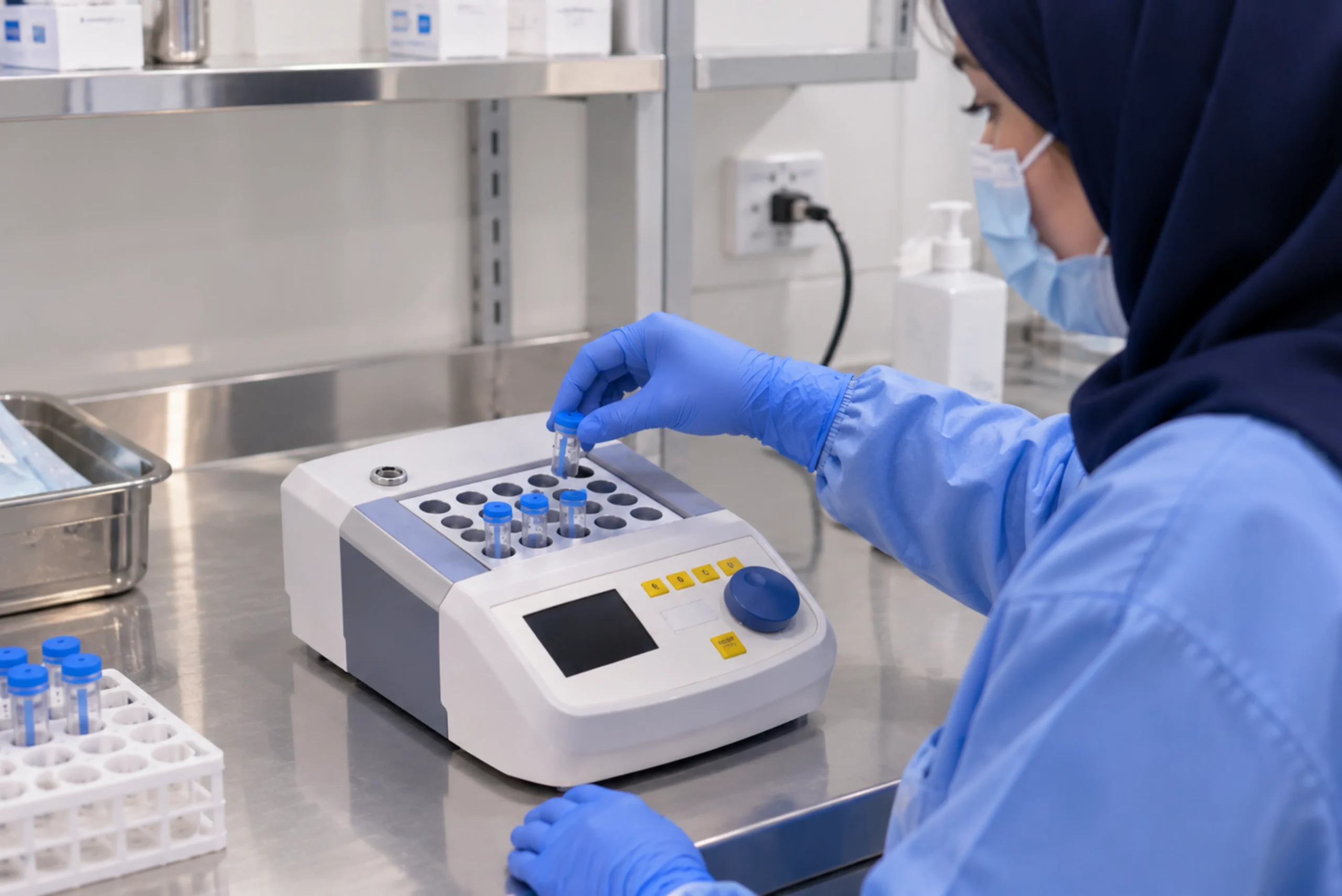
Biological indicators (BIs) are one component of an integrated sterilization-monitoring program. They challenge a sterilization process with resistant microorganisms and are used alongside physical or mechanical monitoring and chemical indicators. Each method provides different information about the cycle and the exposure of the load. [1]
For many healthcare sterilizers, the commonly cited routine baseline is BI monitoring at least weekly. That baseline does not answer every operational question, however. The appropriate schedule also depends on the sterilization modality, the types of loads processed, equipment or process events, and applicable manufacturer instructions, accreditation or regulatory requirements, and facility procedures. [1][2]
Weekly monitoring is a minimum routine frequency
CDC recommendations identify weekly BI monitoring as a minimum frequency for steam and low-temperature sterilizers, using a commercial spore preparation appropriate for the sterilizer type and cycle parameters. [2] Weekly testing should not be interpreted as a substitute for the physical or mechanical records and chemical indicators used to monitor individual loads.
Every sterilization record should support review of the sterilizer and cycle, load identification and contents, exposure parameters, operator information, and mechanical, chemical, and biological monitoring results. [2] A negative weekly BI therefore does not override a failed temperature or pressure record, an incorrect cycle selection, an unacceptable chemical indicator, or a packaging or loading problem.
When routine monitoring may need to be more frequent
CDC guidance notes that daily BI use may provide earlier detection of equipment malfunction or procedural error, particularly when a sterilizer is used frequently, such as for several loads per day. [1] The value of more frequent testing is not simply the number of tests performed; it may reduce the interval during which an undetected problem could affect processed items.
Daily monitoring may therefore be relevant for a frequently used sterilizer or an operation in which delayed detection would have important consequences. A CSSD should not establish an increased frequency in isolation. The schedule should be consistent with the sterilizer manufacturer’s instructions, applicable accreditation and regulatory requirements, and the organization’s approved quality and infection-prevention procedures. Those procedures should also state how results affect load release, investigation, and corrective action.
Implant loads require a separate decision
BI testing for implant loads is a load-specific requirement rather than an alternative to routine weekly monitoring. CDC recommendations call for using a BI for every load containing implantable items and, whenever possible, quarantining those items until the BI result is negative. [2]
The facility’s procedure should define how implant loads are identified, how the BI result is documented, who authorizes release, and how delayed, invalid, or positive results are handled. Any urgent clinical circumstance should be managed under the organization’s approved policy and applicable requirements, not through an informal exception.
Additional testing after equipment or process events
Routine weekly testing does not replace verification after a significant equipment or process event. CDC guidance describes testing sterilizers with biological and chemical indicators after installation, relocation, redesign, major repair, and a sterilization failure before the sterilizer returns to routine use. [1]
For steam sterilizers, CDC guidance may call for three consecutive empty cycles with appropriate biological and chemical indicators after certain equipment or process events. Each type of steam cycle should be tested separately, and evaluated items should remain quarantined until results are acceptable. [1] The facility should follow the applicable event-specific instructions from the sterilizer manufacturer and its approved quality system.
These activities are event-driven verification, not ordinary weekly monitoring. The record should connect the test to the equipment event, cycle, test pack or other challenge used, mechanical and chemical results, BI interpretation, and authorization to return the sterilizer to service. Recording only “BI negative” does not adequately describe the verification activity.
Use a BI appropriate for the process
BI selection must match the sterilization modality and the labeled use of the product. The relevant characteristics include the microorganism, carrier or device format, incubation conditions, and intended sterilization process. CDC identifies Geobacillus stearothermophilus for steam and certain low-temperature processes, while Bacillus atrophaeus is associated with ethylene oxide and dry-heat monitoring. [1]
BI handling, incubation, controls, and interpretation should follow the product’s instructions for use and the facility’s validated procedure. A BI should not be substituted merely because another indicator is available or familiar. A result has meaning only when the indicator is suitable for the process and handled according to the applicable instructions.
Organize the program by monitoring purpose
A clear program separates three related but different purposes:
- Routine monitoring: BI testing at least weekly where applicable, or at a more frequent interval required by the facility’s governing requirements and approved procedures.
- Load-specific monitoring: BI testing for every load containing implantable items, with quarantine whenever possible until the result is negative. [2]
- Event-driven verification: additional testing after installation, relocation, redesign, major repair, or a sterilization failure, before return to routine use. [1]
This structure prevents two common errors: assuming that weekly testing covers every higher-consequence load or equipment event, and increasing the number of BIs without defining how results will guide release, investigation, corrective action, and documentation.
Respond to a positive BI through the approved procedure
A positive BI should initiate the facility’s documented investigation process. The review should address the sterilizer cycle, BI selection, control and incubation results, load configuration, chemical indicators, operator actions, equipment status, and relevant maintenance or utility issues.
The response depends on the sterilization modality and the circumstances. For steam sterilization, CDC recommendations state that a single positive spore test does not automatically require recall of all nonimplant items when there is no evidence of equipment or procedural failure. Additional testing and investigation are required. Repeated positive results or an identified defect may require affected items to be treated as nonsterile and recalled or reprocessed. [2]
For non-steam modalities, CDC recommends a more conservative response after a single positive BI, including evaluation of items processed since the last negative BI through the next satisfactory result. [2] The steam response should not be applied automatically to every modality. Staff should follow the approved procedure and applicable manufacturer, regulatory, accreditation, and infection-prevention requirements.
Frequency does not replace integrated monitoring
More frequent BI testing cannot compensate for inadequate cleaning, incorrect loading, poor packaging, incomplete records, or failure to review mechanical and chemical results. A BI also does not independently demonstrate that every device in a load experienced identical conditions.
Conversely, a negative BI does not erase a failed cycle record or an unacceptable chemical indicator. The strongest monitoring program uses BI results together with physical or mechanical records, chemical indicators, load documentation, and defined release and investigation procedures.
CSSD implementation checklist
- Document the routine BI frequency for each sterilizer and modality.
- Confirm that the schedule meets manufacturer instructions, applicable accreditation and regulatory requirements, and organizational procedures.
- Identify loads that require BI testing regardless of the routine schedule, including implant loads.
- Specify the BI product and microorganism appropriate for each process.
- Define control handling, incubation, interpretation, and invalid-result procedures.
- Document verification after installation, relocation, redesign, major repair, and failure.
- Define quarantine, release, investigation, and corrective-action steps for positive results.
- Review the monitoring procedure when workload, equipment, packaging, or process conditions change.
Educational disclaimer
This article is for educational purposes and does not replace the sterilizer manufacturer’s instructions for use, applicable regulations, accreditation requirements, or the facility’s validated policies and procedures.
References
- Sterilizing Practices, Centers for Disease Control and Prevention.
- Recommendations for Disinfection and Sterilization in Healthcare Facilities: Monitoring of Sterilizers, Centers for Disease Control and Prevention.
References
- Sterilizing Practices. Centers for Disease Control and Prevention. 2024-06 update indicated on source page.
- Recommendations for Disinfection and Sterilization in Healthcare Facilities: Monitoring of Sterilizers. Centers for Disease Control and Prevention. 2023 page; recommendations derived from CDC guideline.
- Sterilization Process Controls. U.S. Food and Drug Administration. 2023 page.
Educational overview. Follow the applicable product instructions, validated procedures, local regulations and your facility’s approved policies.